Lions Intelligence | AI Product Design
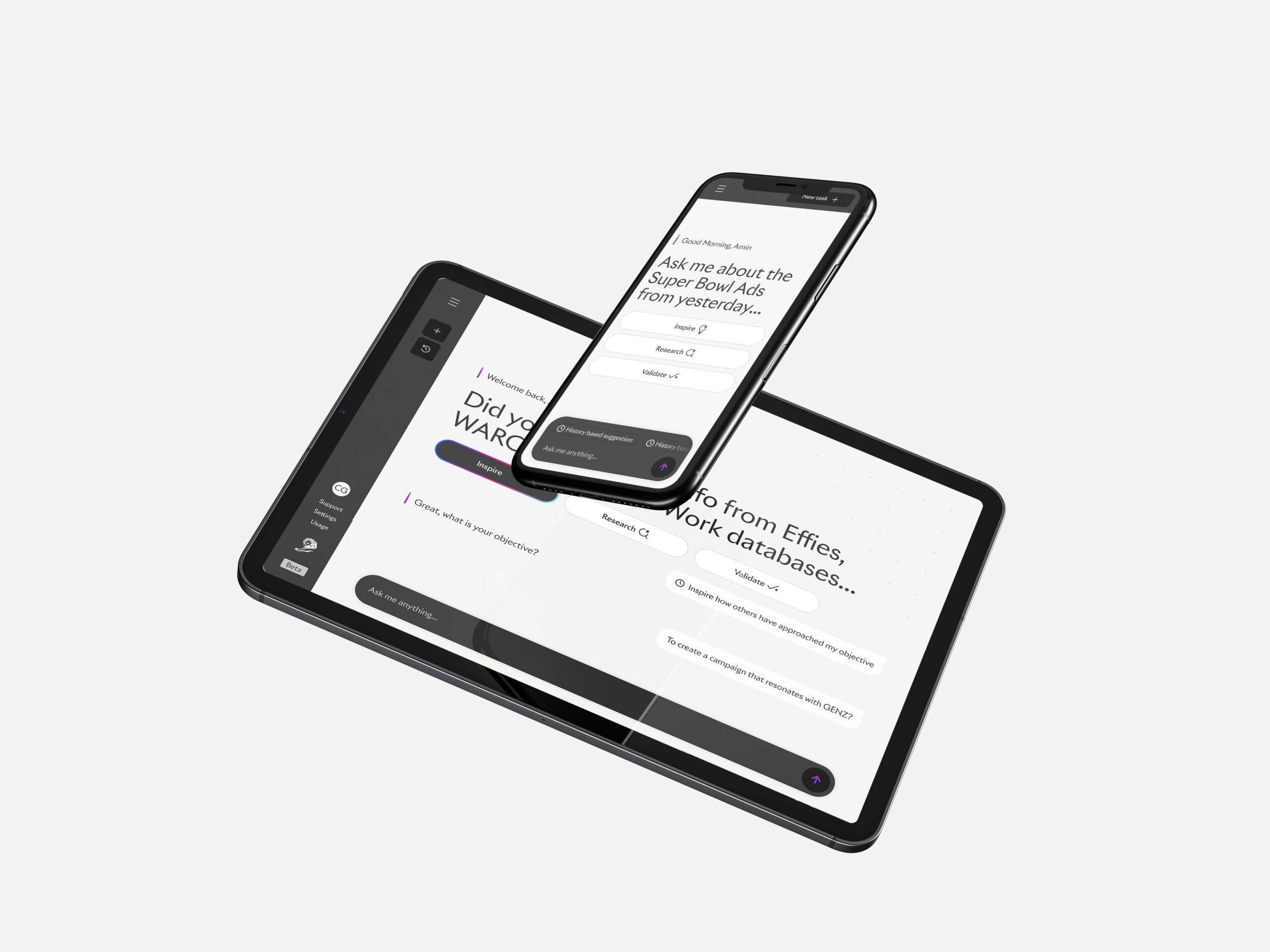
I designed Lions Intelligence from initial concept to delivery, a creative marketing OS built on repeatable design patterns that make four distinct AI agents feel like one seamless experience.

Lions Intelligence | AI Product Design
AI, Product Design, UX Research, Rapid Prototyping, Design Systems, Commercial Strategy
📖 Overview
Informa owns some of the most respected names in creative marketing: WARC, Cannes Lions, Love The Work, Contagious, The Effies. The problem was they all lived in silos. Different subscriptions, different platforms, different logins. Users were paying a premium but spending half their time just trying to find the right thing in the right place. I led the product design for what became Lions Intelligence, an AI-powered workspace that pulls all of that content into a single tool. The real challenge wasn’t building a chatbot on top of a database. It was designing something that worked the way creative strategists actually work: messy, iterative, deadline-driven.
Summary
🚩 The Problem
The brief started vague: “we want an AI tool.” Stakeholders had a basic chat interface in mind, something that could answer questions about the WARC and Lions databases. But a simple chatbot couldn’t justify the All-Access price point, and it couldn’t support the kind of multi-step research workflows that creative directors actually need. The business needed a reason to upsell single-product subscribers. Users needed something that genuinely improved their workflow, not another search bar with a gradient. And nobody had validated whether users even wanted an AI tool in this space, or what they’d actually use it for.
🔍 The Approach
I started by working closely with the engineering and data science teams to understand what was technically possible: what data we had, how good the retrieval was, where the gaps were. From those conversations I shaped a concept that went beyond chat, a workspace where users could start with a question, build up research over time, and actually do something with it. I pitched this to the CDO around the commercial angle. If we build something strategists genuinely rely on day-to-day, it becomes the reason they upgrade to All-Access. Not a feature. A product. Once we had buy-in, I worked with the Head of Product and engineering to make sure every design decision was grounded in what we could actually deliver.
🧪 Testing the Waters
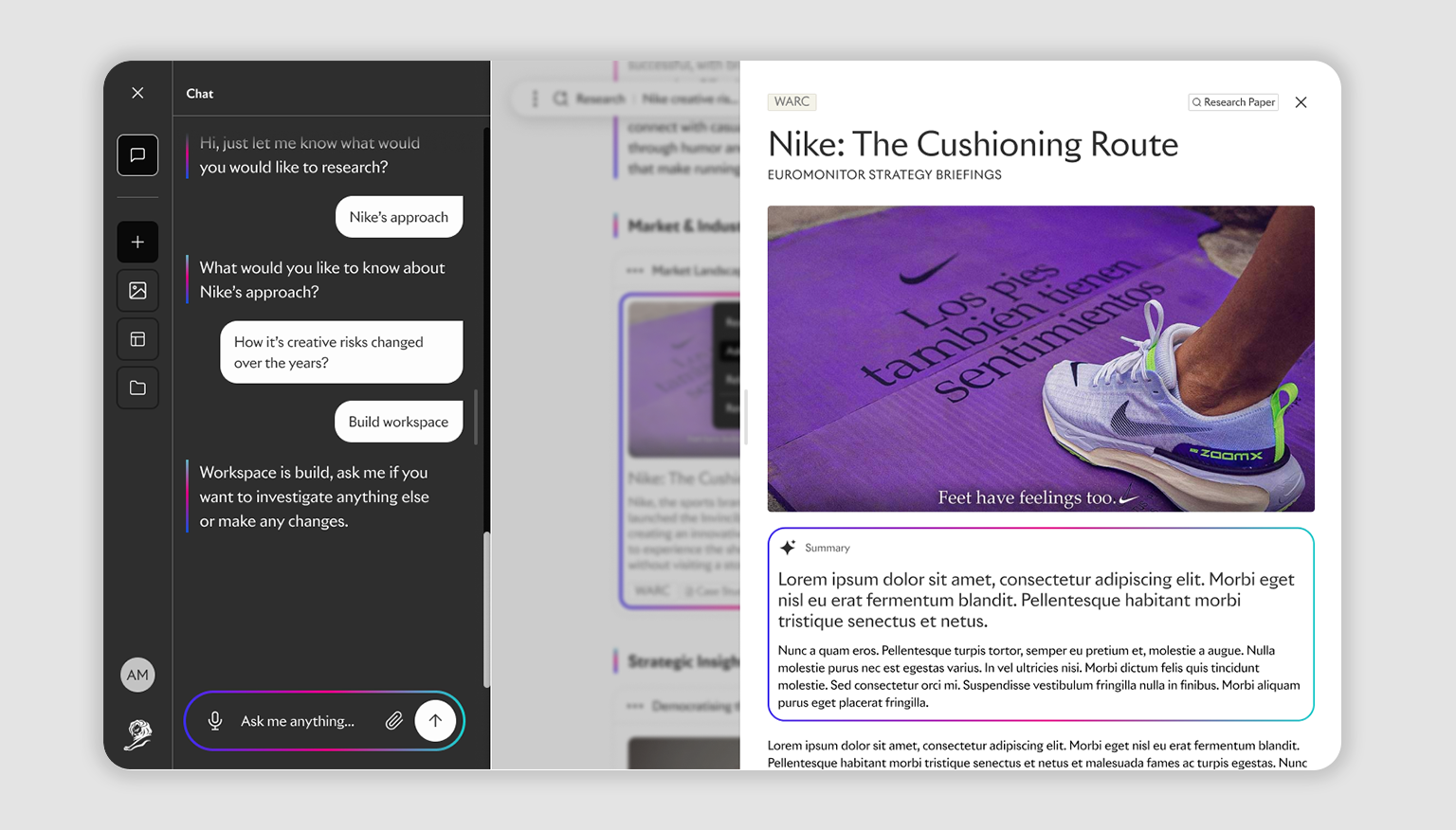
Rather than spending months designing in a vacuum, we launched a Lite preview at Cannes Lions 2025, a deliberately stripped-back version that let festival attendees interact with the Lions and WARC databases. We wanted sign-ups, but more importantly we wanted signal. What are people actually asking? Where do they get stuck? Running interviews alongside the deployment gave us exactly what we needed: nobody was asking simple factual questions. They were building arguments, hunting inspiration for pitches, checking whether creative directions had legs, and trying to turn it all into something they could share.
Project
🤖 Discovering the Four Agents
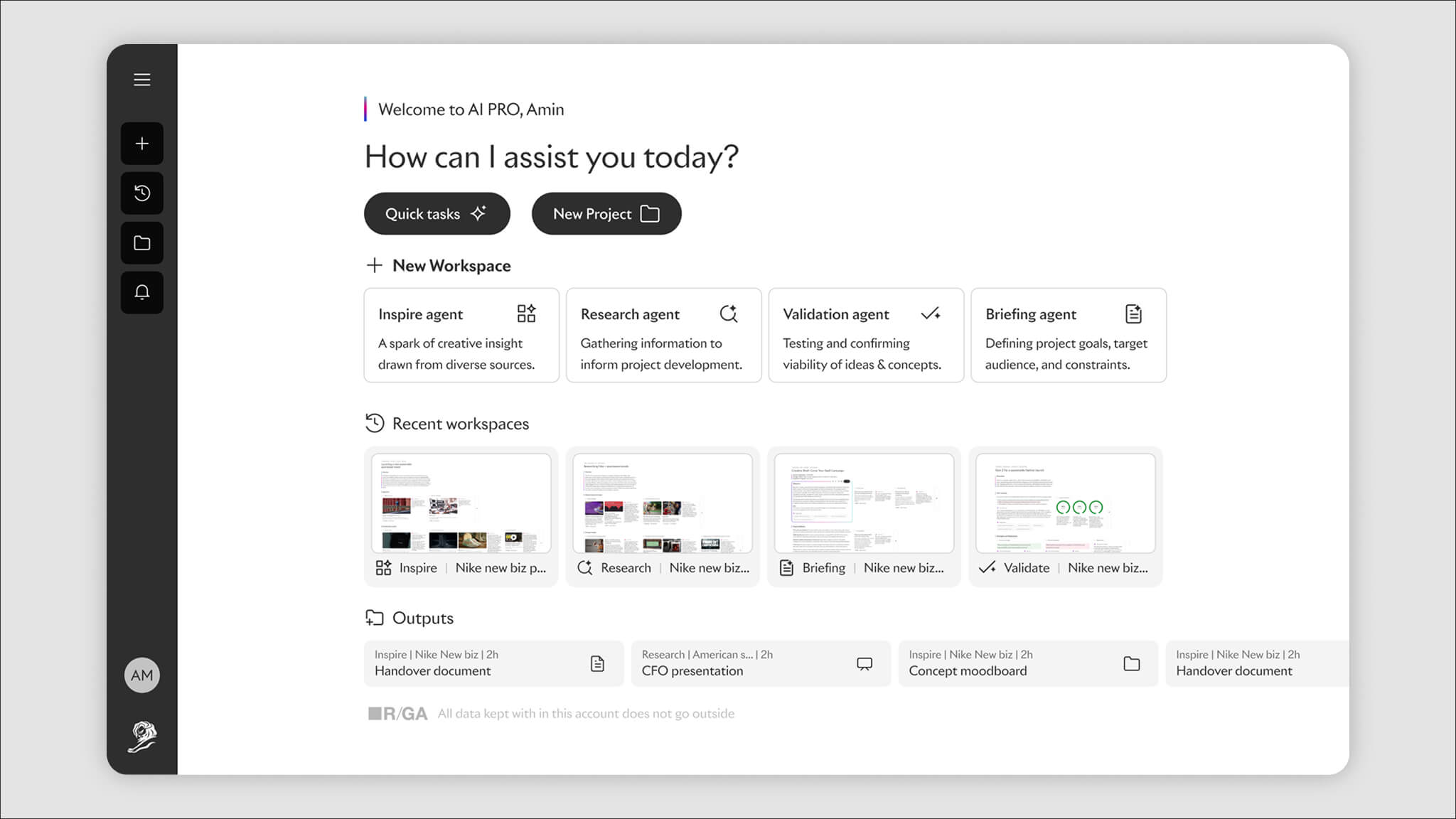
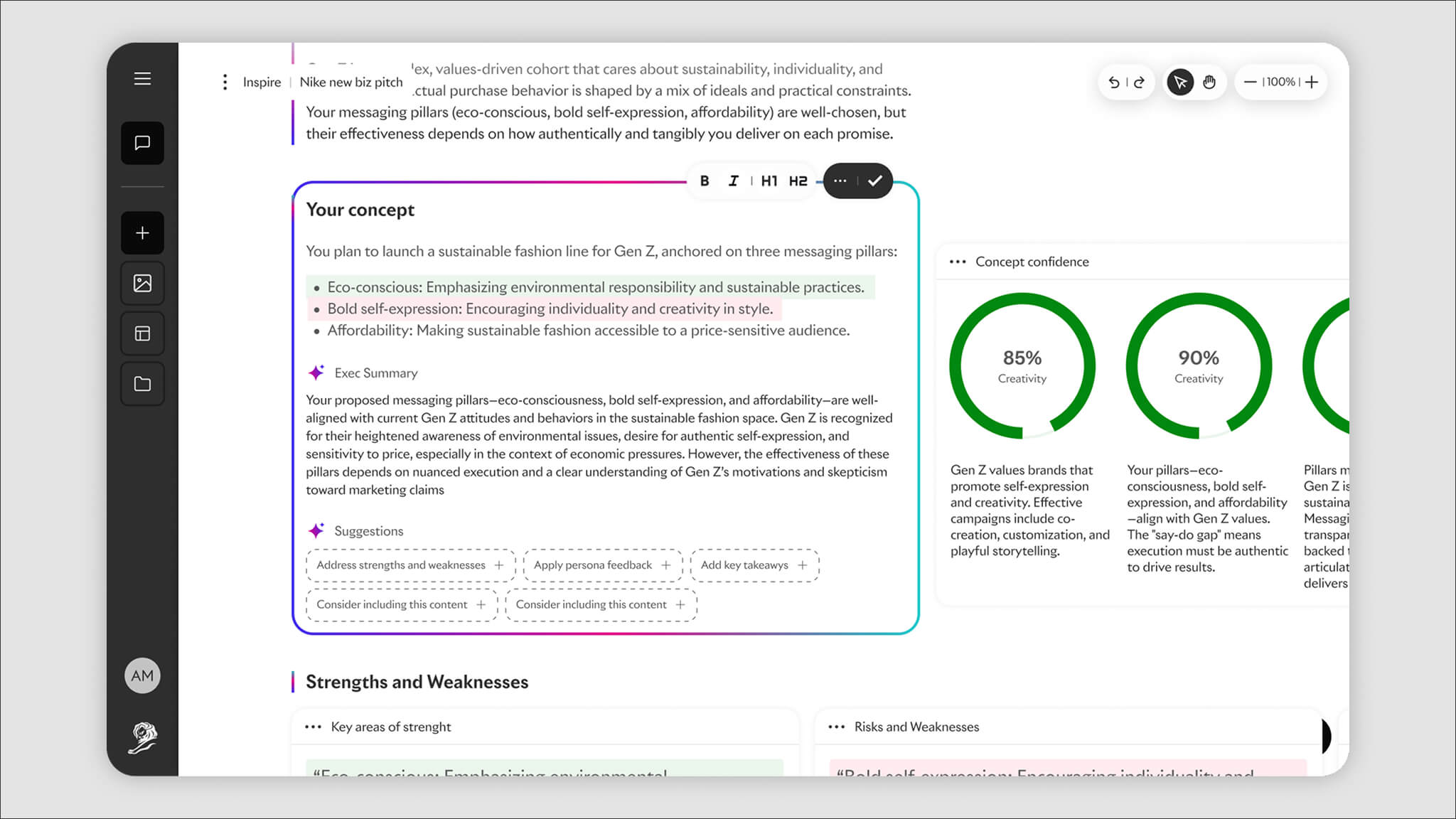
The Cannes research and subsequent interviews pointed clearly toward four distinct workflows. Inspire: exploring award-winning work for creative reference. Research: structured category deep-dives pulling from WARC, Lions, and effectiveness data. Validation: testing assumptions against real precedent to check whether an idea has legs. Briefing: turning raw thinking into structured, shareable documents.
These weren’t categories we invented in a workshop. They came directly from watching how people tried to use the tool.
🧩 The Pattern System
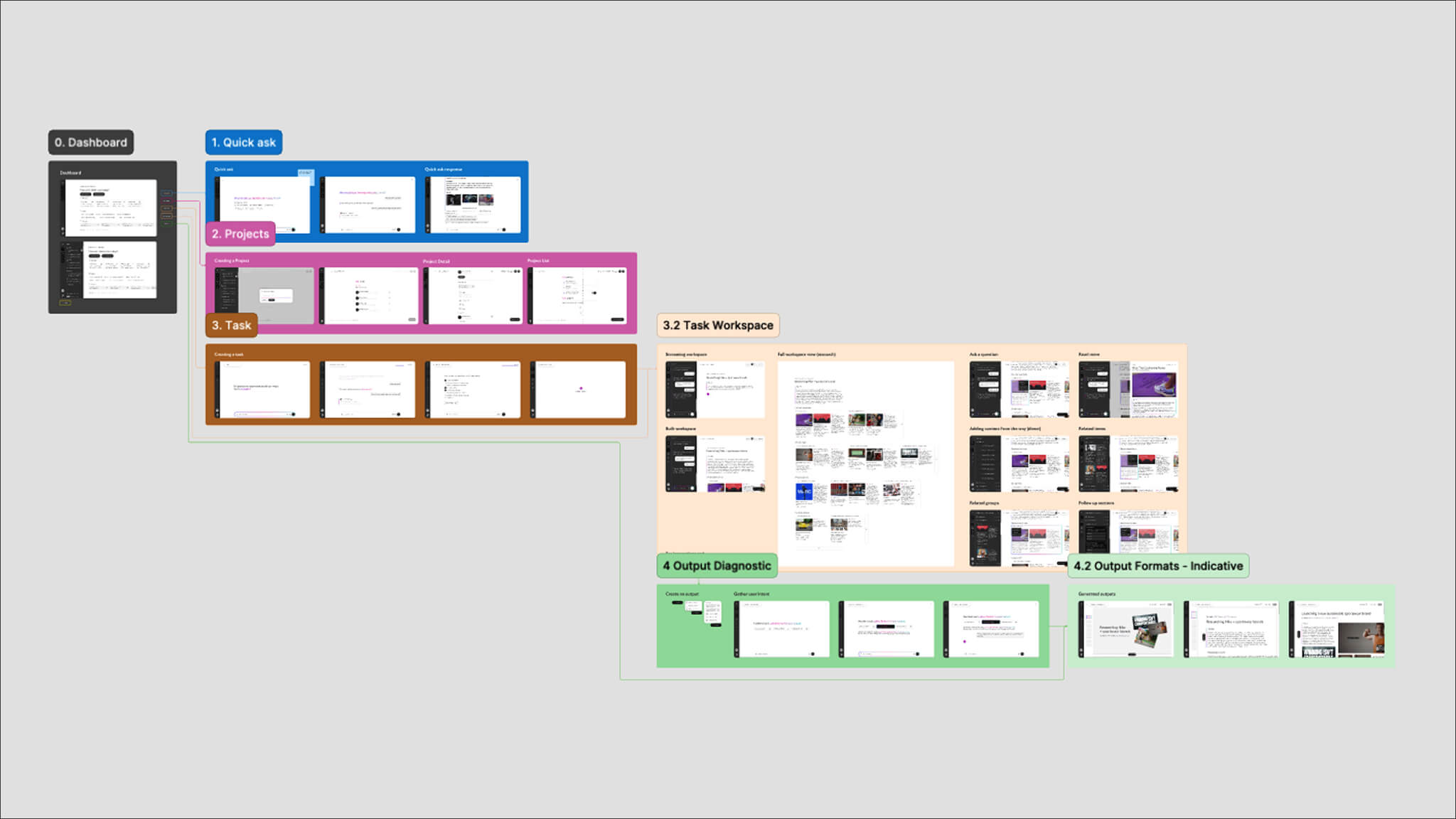
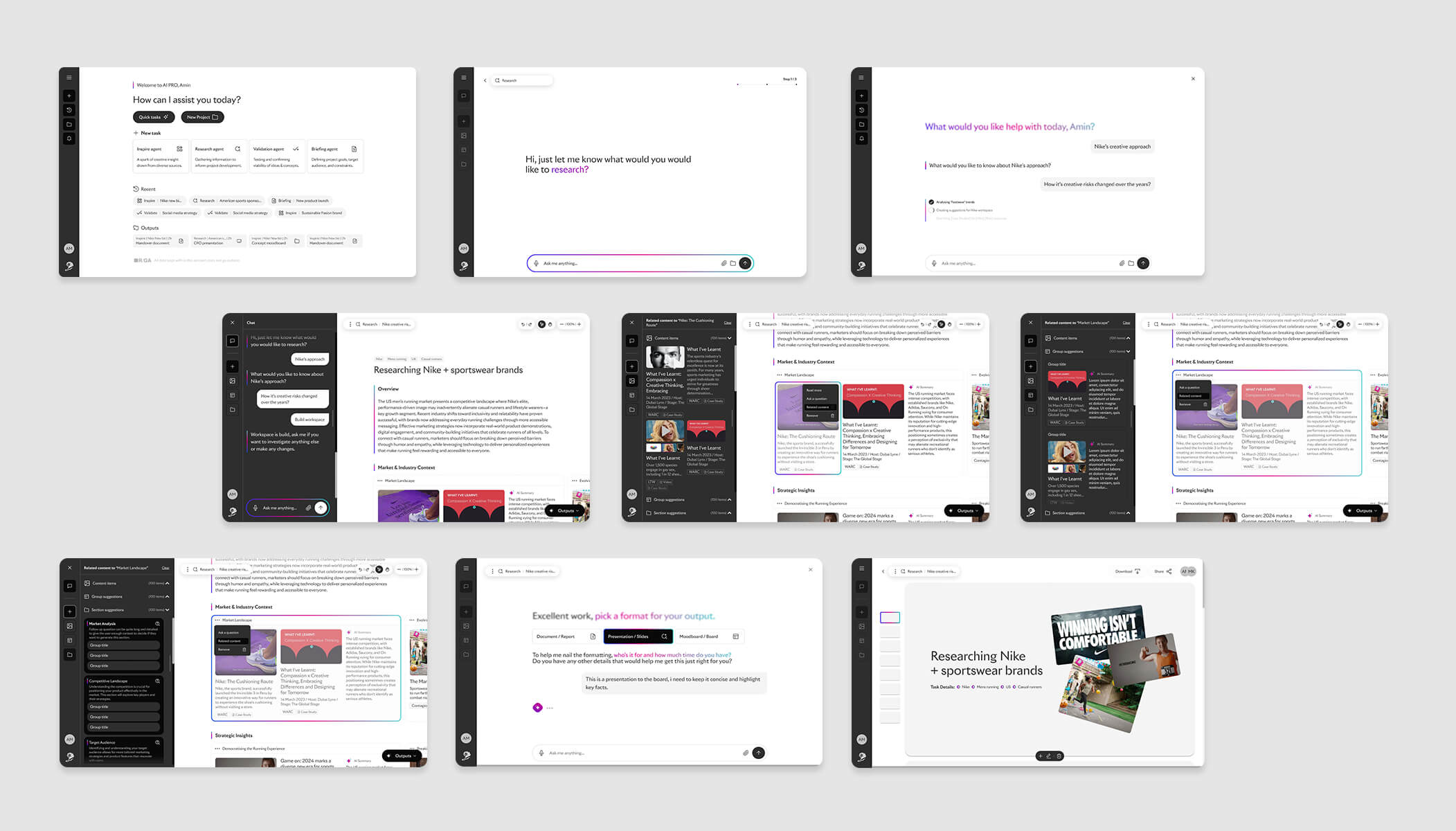
Four agents doing very different things still needed to feel like one product. Switch from Research to Validation and you shouldn’t have to relearn anything. So I designed a repeatable three-step pattern that runs across all of them.
Diagnostics is the guided conversation phase, where the agent asks targeted questions to understand what the user needs before doing anything.
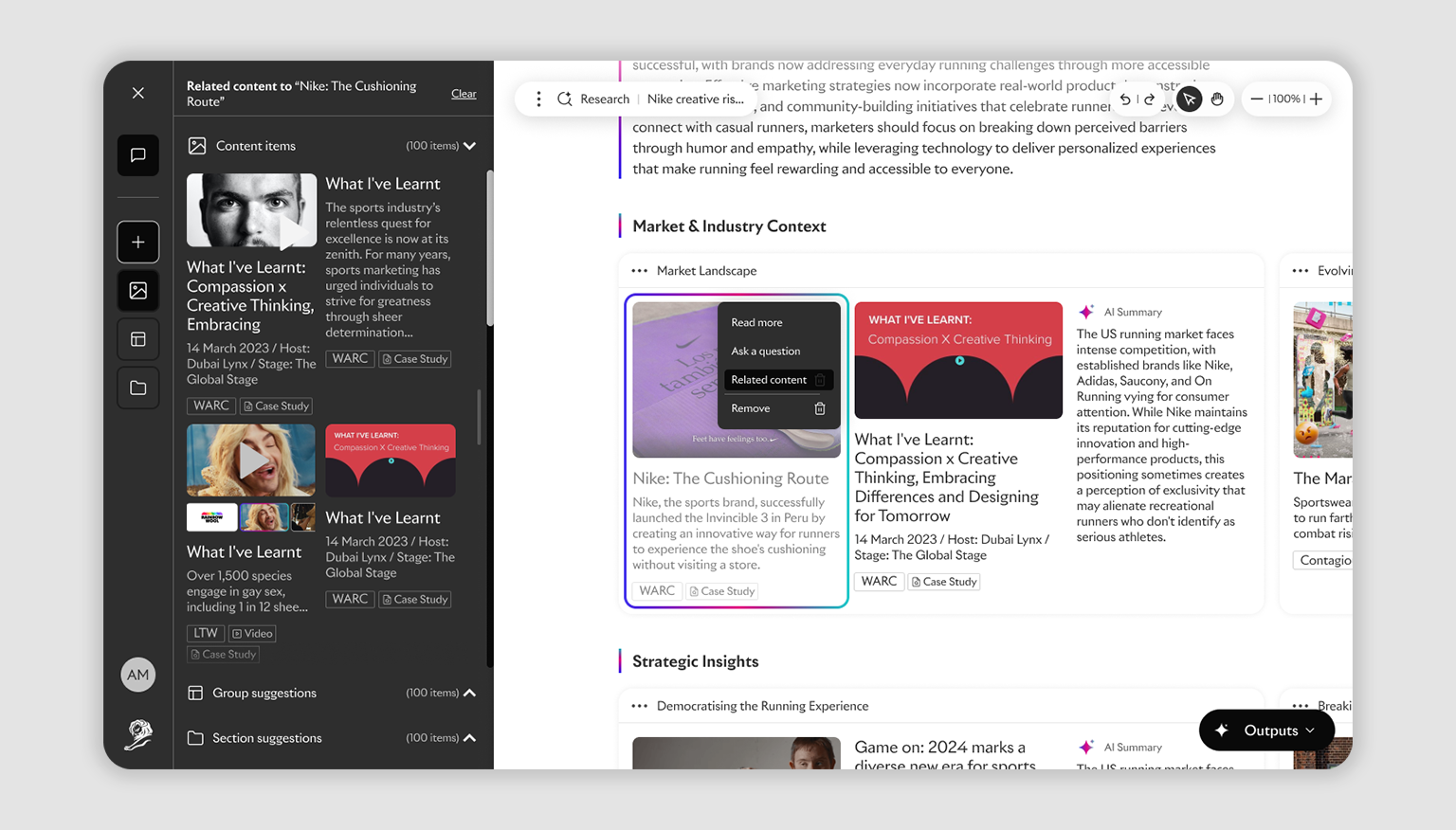
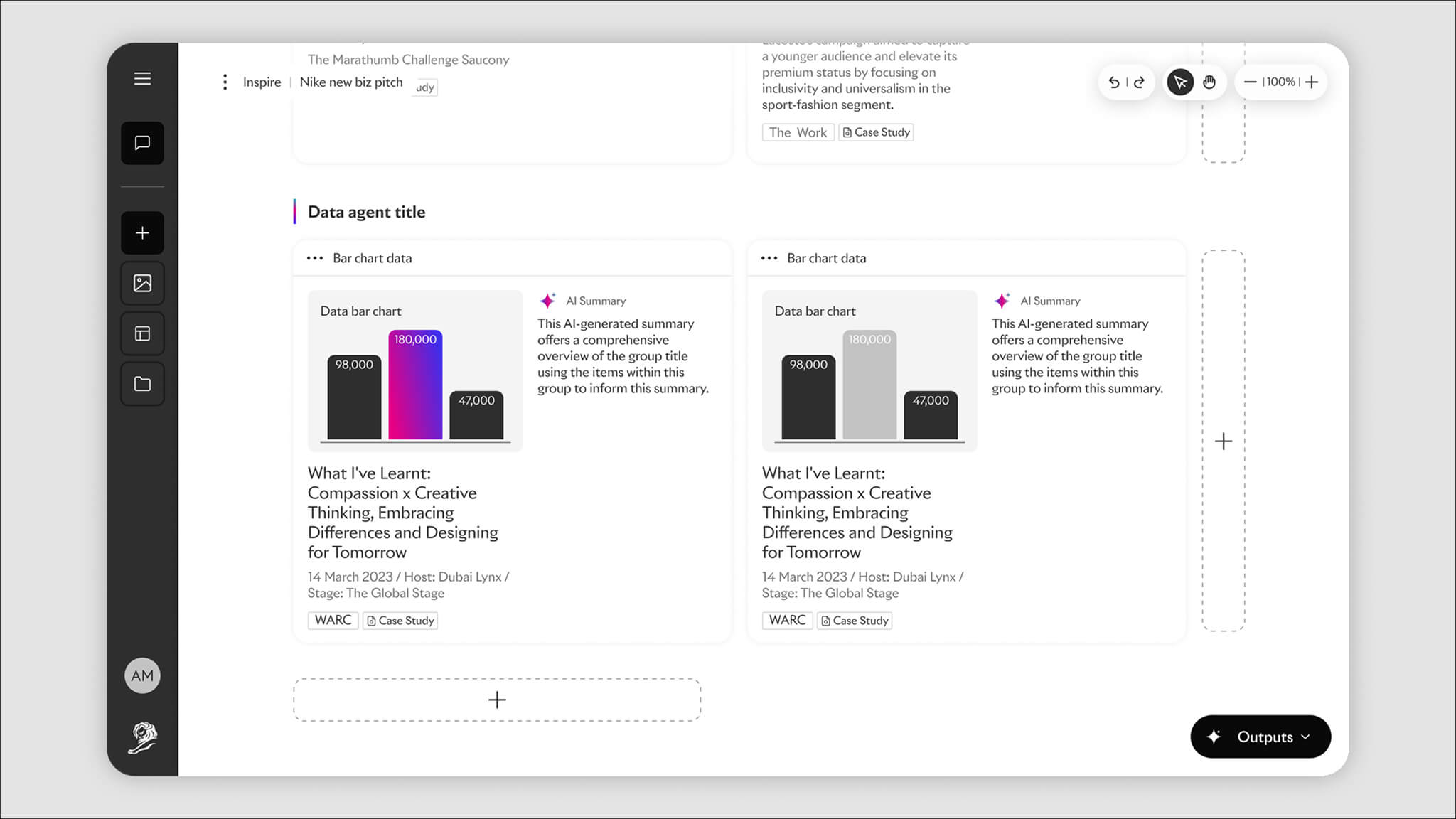
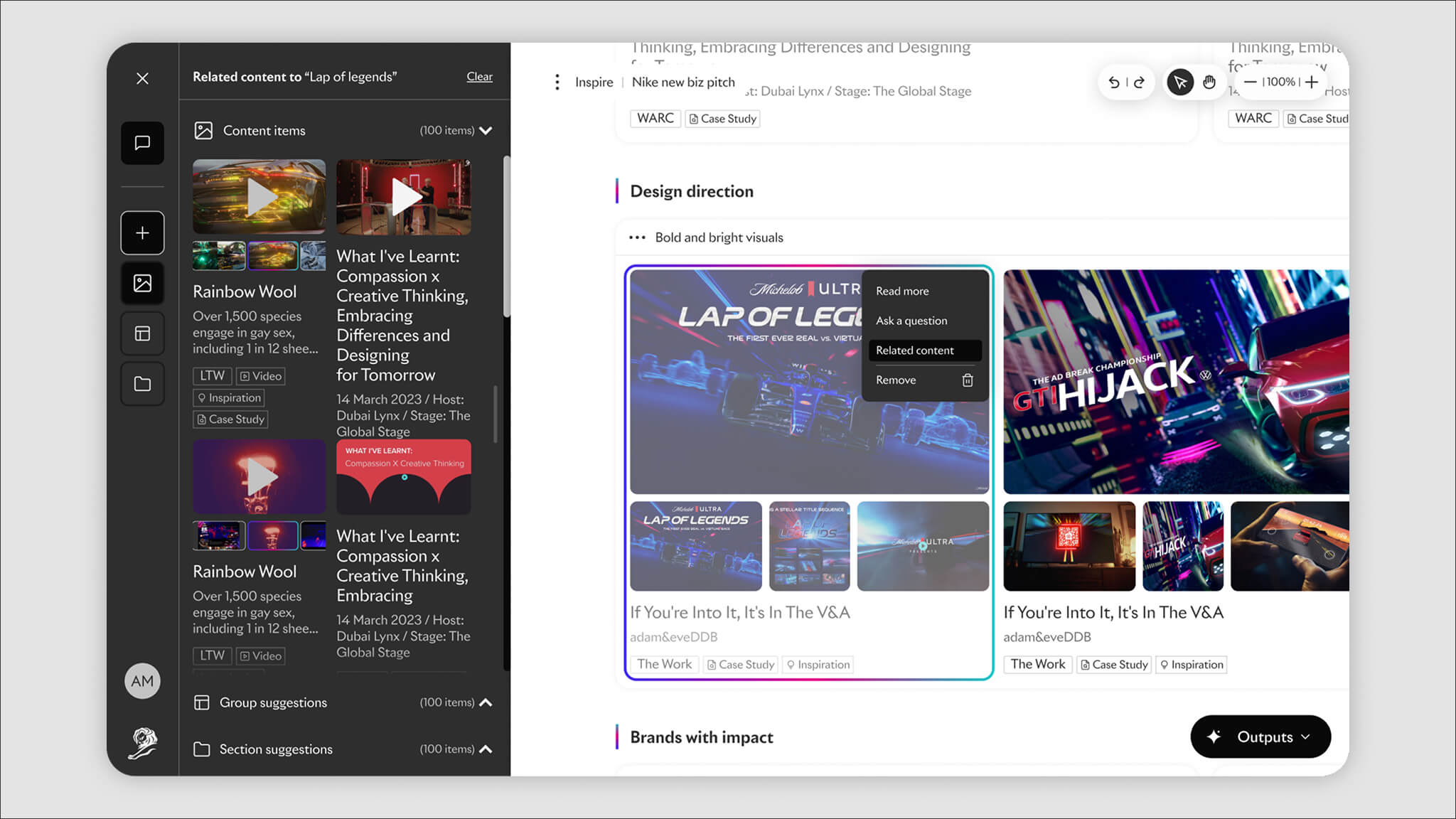
Workspace is the interactive environment where relevant content surfaces and users can curate, dig deeper, and refine. The layout, the interactions, the card behaviour are all consistent across agents regardless of what’s inside.
Output is where the user picks a format and the platform generates a deliverable from their curated content. The pattern is flexible enough that it works for all four agents today and whatever comes next.
📤 Designed for Output
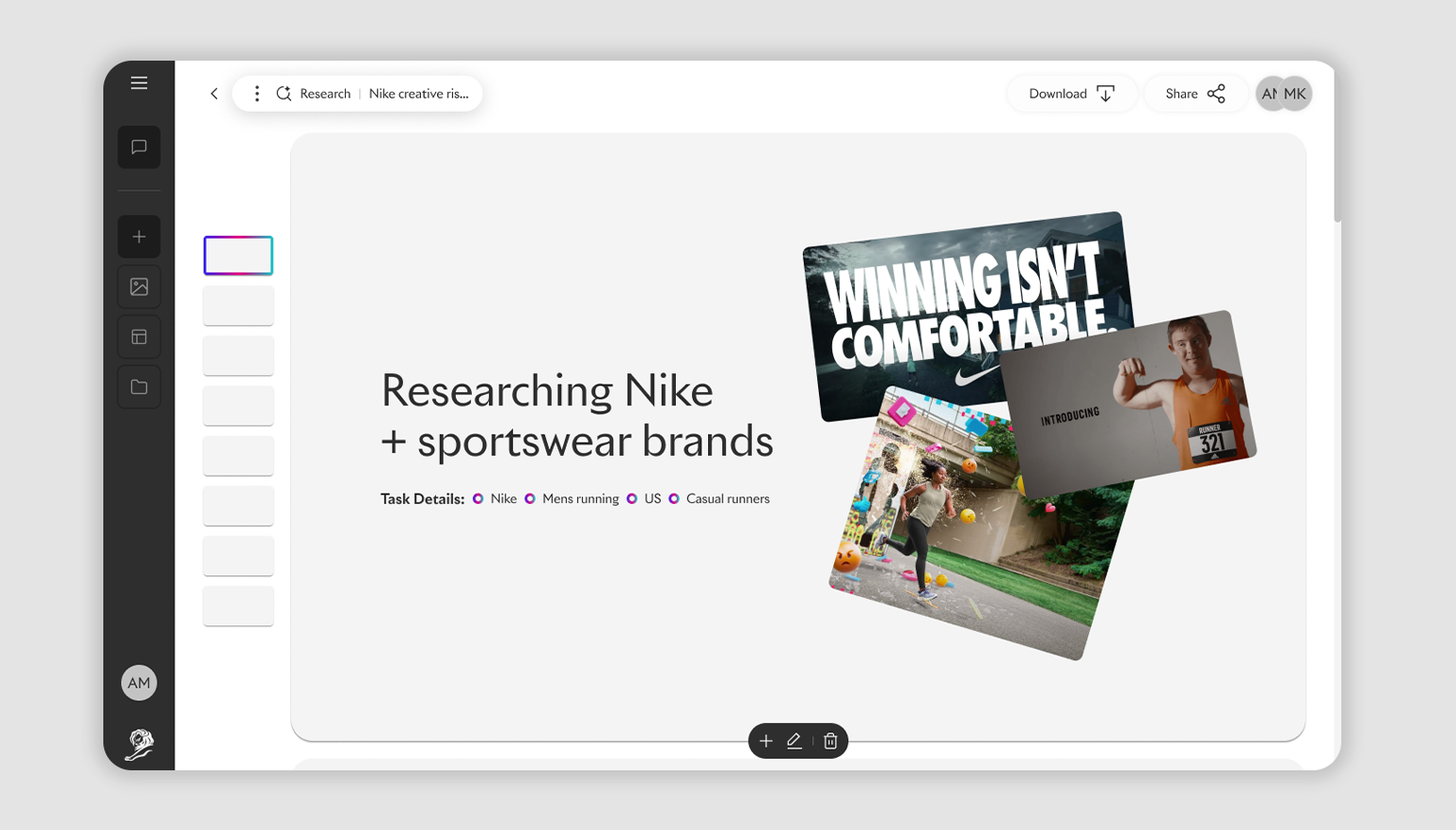
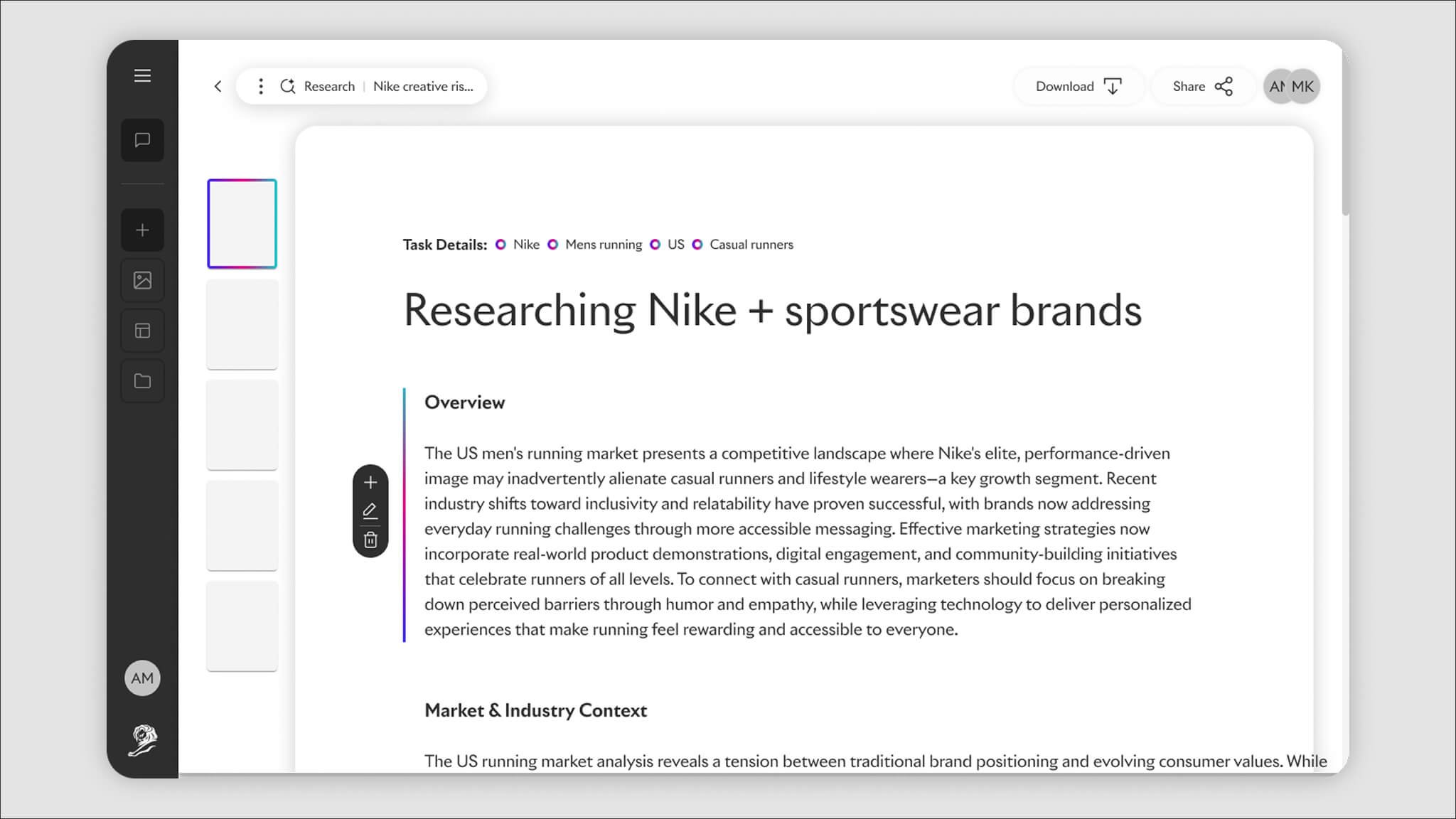
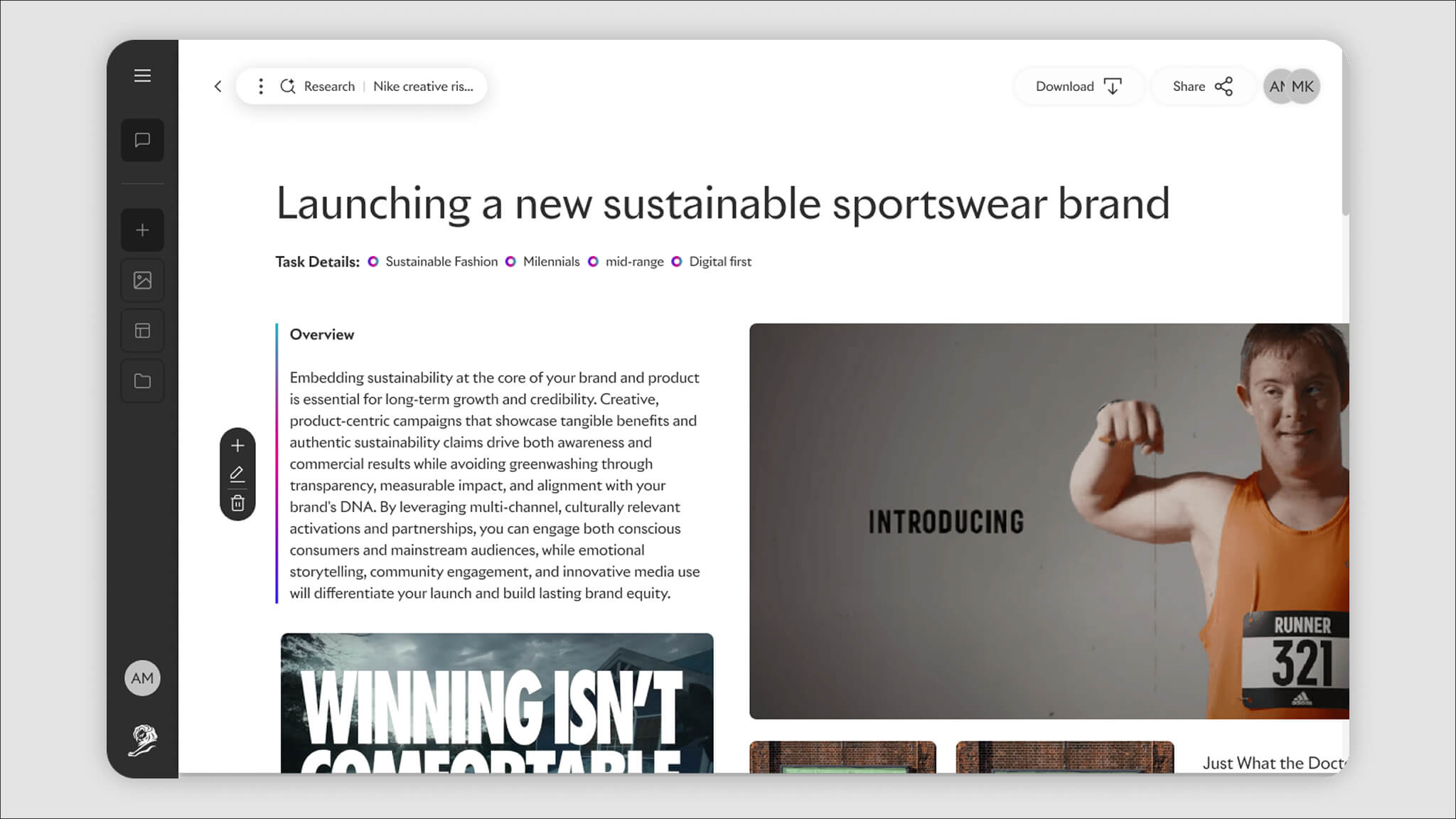
People don’t just want insights, they need to walk into a meeting with something. So we designed three core output types: a Presentation for pitching to stakeholders, a Document for deeper written analysis, and a Board for visual, reference-heavy creative work. Three formats was a deliberate call, enough to cover most use cases and focused enough to do properly within the timeline. We could always expand based on what users actually reached for.
Conclusion
🔧 Prototyping & Validation
I used vibe coding to turn designs into working web prototypes with realistic content, not for polish, but to test whether the three-step flow felt right, whether users understood where they were, and whether the workspace interactions held up. Getting working prototypes in front of real users quickly meant the patterns were tested and iterated before anything went near engineering. By the time we moved to build, the logic had been confirmed by the people who’d actually use it.
🚀 Results
Early beta numbers are encouraging. Single-product subscribers exposed to the tool are converting to All-Access at a higher rate, and the commercial team puts this down to how easy it is to demo. User satisfaction is high, with most testers saying it actually aids their workflow rather than just surfacing links. Beta users are returning weekly, which tells you it’s becoming habitual rather than a novelty. And in testing, nobody struggled when switching between agents. The three-step pattern did exactly what it was designed to do.
🏁 What I Learned
The stakeholder brief was “build an AI chatbot.” If we’d done that, we’d have shipped something forgettable. Taking time to understand what users actually needed, through the Cannes preview, interviews, and real usage, meant we built something far more ambitious. The pattern system was an upfront investment that paid off: we could move fast on new agents without sacrificing consistency. And keeping the output set tight kept us focused on quality. The bit I enjoy most, translating between engineering, data science, product, and commercial, was also the thing that made the difference.
Contact